Madiha Yaqoob
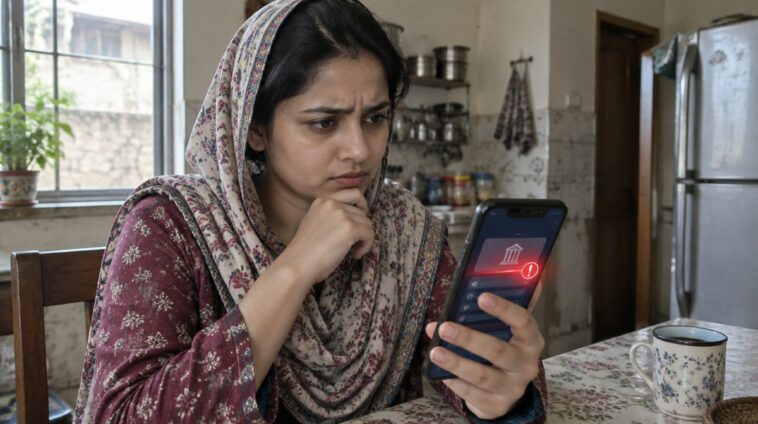
In one case documented by Pakistan’s Financial Monitoring Unit, 118 individuals received more than 25,000 bank transfers, each between PKR 3,000 and PKR 50,000, from housewives, students and salaried people who had joined an online “paid-to-click” earning programme. Both organisers were later arrested. Most apps sold as “online earning in Pakistan without investment” follow the same design: joining is free, but real earning only begins after you buy a plan, and payouts come from newer users’ deposits rather than from any paid work.
If an app pays you to watch ads, like videos, “grab orders” or invite friends, and then asks for an Easypaisa or JazzCash deposit to unlock a higher level, treat it as an unlicensed deposit-taking scheme until it proves otherwise. The checks below take about ten minutes and cost nothing.

How the pay-to-earn model works
App names and logos change, but the mechanics barely do. Knowing the stages helps you recognise where a particular app sits before you are in too deep.
- The free hook. Sign-up needs only a phone number. Daily tasks pay small amounts, and the first small withdrawal usually goes through. That first payout exists to build trust, and it is also the screenshot that circulates in WhatsApp groups.
- The VIP ladder. Soon the free tier caps out. Higher “levels” promise bigger daily rewards, and each level needs a deposit. The return is often stated as a fixed daily or monthly figure.
- The referral engine. Commissions for bringing in friends and family grow faster than task rewards. At this point the app is paying you to recruit, which is the defining feature of a pyramid.
- The squeeze. Withdrawals slow down, minimums rise, and a “tax”, “verification fee” or “account upgrade” is demanded before money can leave. Then the app goes offline, or relaunches under a new name.
The FMU case adds a detail you can check yourself: the organisers collected money in sole proprietorship accounts instead of their company accounts. If the account you are asked to pay is a personal wallet in an individual’s name, that alone is reason to stop.
Why an SECP certificate proves very little
Many of these apps display a certificate of incorporation to look official. The regulator has addressed this directly. In its alert against one scheme that promised monthly returns of 8% to 12%, the SECP reminded the public that a certificate of incorporation only confirms a company is registered. It does not authorise that company to raise deposits or launch investment schemes.
Registration and legitimacy are separate questions. In an earlier SECP press release, the regulator named registered companies, one of them called BH Online Jobs (SMC-Private) Limited, as engaged in “unauthorized and dubious business activities” contrary to their own memorandum of association. A real company name on the screen tells you someone filed paperwork. It says nothing about whether taking your money is legal.
A ten-minute check before you deposit
- Ask who pays for the work. Legitimate work has a client: a business buying a logo, an article, or a hundred product listings. If the app cannot name who pays for the ads you watch or the orders you “grab”, the only source left is other users.
- Check whether earning needs a deposit. Paying to unlock the ability to earn is the core pattern. So is paying to unlock a withdrawal.
- Look at how returns are described. A fixed daily or monthly percentage on money you deposit is an investment promise, and investment products in Pakistan need a licence.
- Look at the receiving account. A personal mobile wallet or an individual’s bank account is a red flag, as the FMU case shows.
- Find the support channel. If help exists only in Telegram or WhatsApp groups run by “team leaders”, there is no one accountable when withdrawals stop.
- Search the regulator. Put the company name into the search box on the SECP website and check its press releases and investor alerts. A new name with no record is not reassuring either, because these schemes rebrand often.
What does legitimate online earning look like?
Real online income in Pakistan is large and measurable. Freelancers brought in $352 million in export receipts in July and August 2026 alone, according to State Bank data reported by ProPakistani, up 44% from the same period a year earlier. That money comes from clients abroad paying for finished work, and it arrives through banks and regulated payment channels.
The honest trade-off is that real earning is rarely instant. It needs a skill a client will pay for, which is why the services beginners can still sell matter more than any app. Legitimate platforms can involve costs, such as buying Upwork Connects to send proposals, but none of them promise a fixed return on the money you spend. Those platforms also protect the payment itself through escrow and dispute processes, which our guide to Upwork and Fiverr payment protection explains. If cost is the barrier, government-funded training such as the PSEB SkillTech programmes is a far better starting point than a VIP level.
Already paid? Report it here
Act quickly, because withdrawal limits usually tighten once complaints begin.
- Save evidence first. Screenshot your account balance, deposit receipts with transaction IDs, the receiving wallet or account number, and the group chats where the scheme was promoted.
- Report to the SECP. The regulator accepts reports of suspected fraudulent investment schemes through its Complaint Management System at xs.secp.gov.pk, by email at [email protected], or on its toll-free helpline 0800-88008, as listed in the same SECP alert.
- File a cybercrime complaint. The National Cyber Crime Investigation Agency takes online complaints through its official complaint portal. Attach the evidence from step one.
- Tell your bank or wallet provider. Report the transactions through your provider’s official helpline or app, and ask them to flag the receiving account.
- Ignore “recovery” offers. People who contact victims promising to recover lost money for an upfront fee are usually running a second scam on the same list.
Regulation is still catching up
Part of the reason these apps keep reappearing is a gap in the law. In February 2026 the SECP opened consultations on the Draft Companies (MLM, Referral Marketing, Pyramid and Ponzi Schemes) Regulations, 2026, noting that Pakistan currently lacks clear legal definitions for these schemes, according to Profit. Until those rules are final and enforced, the ten-minute check above is your main protection. Share it with the person in your family who just joined a new earning group.