

 Hajra Naz
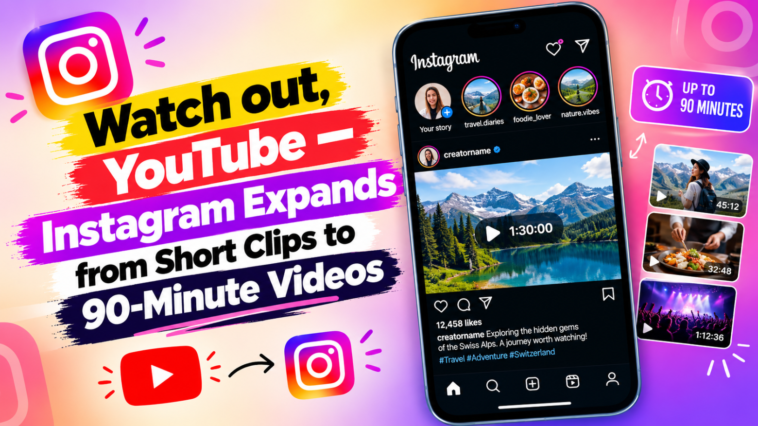
If you could secure one million followers on any social media platform, which network would you choose? There is a correct answer. That answer is YouTube, assuming your primary goal is getting paid for your work. However, a major update from Instagram could upend YouTube’s long-held dominance. Instagram might become the most lucrative platform for creators if it plays its cards right.
Instagram Introduces 90-Minute “Features”
Instagram announced that it is testing a new type of video upload format. This feature allows creators to share “features,” which are full-length videos lasting up to ninety minutes. After years where every social platform aggressively pursued short-form video, this represents a notable shift in strategy for Instagram.

Read More: Instagram Wants to Give You More Control Over Your Algorithm
The Limits of Short-Form Monetization
Short-form vertical video defined the internet of the 2020s. However, the creators producing those clips rarely make substantial money directly from platforms like Instagram. The Meta-owned platform offers monetization tools like subscriptions. Yet, it does not routinely pay creators on a traditional per-view basis.
Adam Mosseri serves as the head of Instagram. He discussed platform economics during an interview on the creator economy show hosted by Colin and Samir. Mosseri explained the three core revenue streams available to creators. He stated that content producers get paid by the platform, by fans, or by corporate brands.
He noted that the current financial model on Instagram relies primarily on brand sponsorships. Some users manage to earn revenue from loyal fans. The platform maintains a small performance-based program. However, Mosseri admitted that the company spends more money than it earns back on those programs. Scaling up direct payouts does not make financial sense because the company would simply burn excess capital.

Read More: Instagram Introduces AI-Powered Video Assistant for Creators
How YouTube’s Revenue Model Works
YouTube utilizes a straightforward payment model. Advertisements run on videos, and creators enrolled in the YouTube Partner Program receive fifty-five percent of the ad revenue generated by their content. That financial return adds up quickly. YouTube reported paying out more than one hundred billion dollars to creators, artists, and media companies over a recent four-year period.
Instagram and TikTok struggled to replicate YouTube’s model using short-form content. Short videos are harder to monetize because there is less room to place advertisements. Consequently, many creators view those accounts merely as promotional arms for their YouTube channels rather than meaningful revenue drivers.
Meta’s Potential Advertising Strategy
Instagram is encouraging creators to upload longer videos, much like it did eight years ago with the now-defunct IGTV. Parent company Meta could potentially integrate targeted advertisements into these long-form videos as well.
If Meta adds ads, could Instagram meaningfully compete with the YouTube Partner Program for the first time?
A Meta spokesperson stated that it is too early to share a long-term monetization model. However, the company is exploring ways for creators to earn from brands, fans, and Instagram, including performance-based incentives. Over time, leadership believes long-form content will offer compounding benefits for creators to tell new stories, reach new audiences, and find new partners. This evolution should lead to numerous monetization opportunities.
It is not a particularly promising answer, but it is also not a flat refusal.
Read More: Instagram Introduces New Rules for Undisclosed AI-Generated Profiles
Changing Leadership Stances on Long-Form Content
Adam Mosseri explained in a video announcement why the platform is embracing long-form content after scrapping its old IGTV product.
Mosseri noted that he had long been against doing long-form video on Instagram. He pointed out that shorter content like Reels drives more shares and direct messages among daily users. However, Instagram VP of Product Tessa Lyons advocated for the change and finally convinced Mosseri to give long-form content another shot.
Lyons emphasized that Reels will remain a core part of Instagram. At the same time, she stated that users should be able to go deeper with their favorite creators and content directly on Instagram.
Integrating Short and Long-Form Video
In short, Instagram would rather keep fans on its own platform to enjoy both short- and long-form content than lose them to YouTube. Instagram is testing a feature called “Clips as Reels.” This tool lets creators make short Reels out of their long-form content to link viewers to the longer video. Viewers can also save the longer video to send to the Instagram app on their TV.
Instagram is currently testing Features and Clips as Reels in select regions before expanding. The platform is also working on improved discovery features for Live video and a profile hub for episodic Reels. This setup functions similarly to TikTok’s playlist feature.
Mosseri expressed excitement for the update. He noted that the team has worked hard to make short-form and long-form video symbiotic. The company plans to support these formats in both the mobile app and the TV app. While perfecting the experience will take time, Mosseri expressed deep excitement and long-term commitment to the initiative.